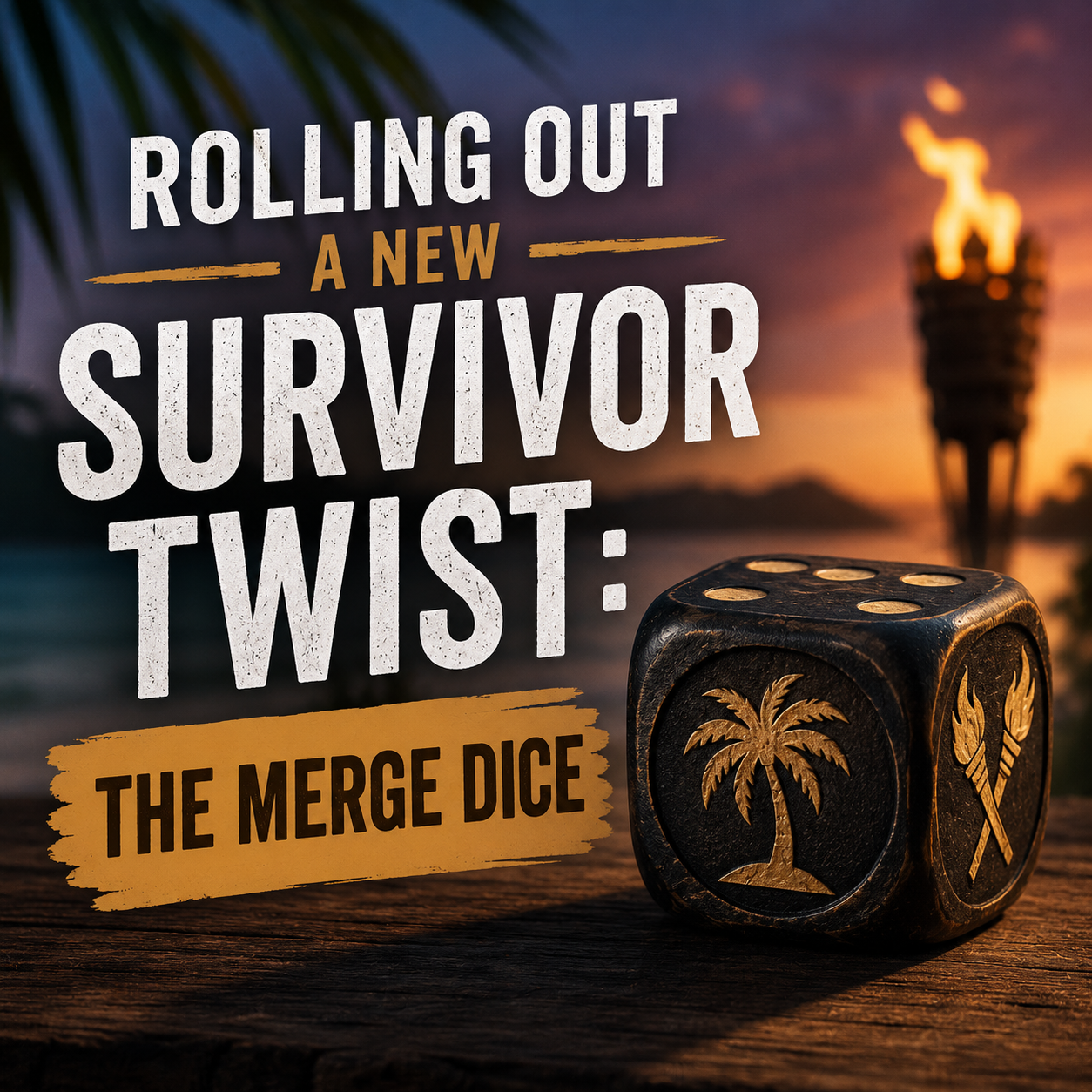
Rolling Out a New Survivor Twist: The Merge Dice
Survivor is a game, yes? Let’s lean in and permanently roll another little twist into it.
Here’s the idea.
We start with 18 players, divided into three tribes of six. Neo-classic. The game kicks off normally, but right away, a ticking clock is hanging over everything—only, nobody knows exactly when it will go off.
Starting at the second reward challenge (17 players left), Jeff pulls out a six-sided die. The die is mostly blank, but one face says “MERGE.” He rolls it in front of everyone. If it lands on “MERGE,” then boom—the three tribes immediately dissolve and split into two new tribes, divided at random by rock draw. If “MERGE” is not rolled then life goes on for another cycle. But here’s the catch: every week the die gets “Merge-ier”. If the first roll doesn’t trigger a merge, the next week a die with two “MERGE” faces gets rolled. Then three, four, until eventually all six sides say “MERGE” and it becomes inevitable.

After the first merge happens and the players are living in two new tribes, the cycle begins again. At the next reward challenge, Jeff brings the die back. Same deal: 1/6 chance at first, then increasing odds each week. When “MERGE” is rolled for the second time, everyone joins together into one single tribe. From that point on, normal jury phase rules apply, and anyone voted out from the single tribe goes to the jury. So yes, that means jury size is different every season, depending on when the final merge occurs.
Tribes could potentially merge into two with as many as 17 players left or with as few as 12 players left. In some seasons tribes would be fully merged into one with as many as 16 players (though there would only be a 1/36 chance of that happening) or as late as 6 players (again very rare, but possible). Usually the first merge would be around 14-15 players left (about 7-8 per tribe) and the final merge would be around 10-12 players left.
Players would need to adjust their strategy based on the nature of their season, and how fast the merges occur. Some seasons, players might be living with their original tribes for a long time, building deep alliances and relying on tribe strength to keep them away from tribal council. Other times, the tribes could get scrambled almost immediately, forcing new connections and rapid-fire strategy. Some games the jury would be large and players could focus on playing a nice well-rounded game. Other times the jury could just have a handful of players, so it would be crucial to refine the right relationships. Some seasons the final two tribes may stay intact for a long time, turning the game into an intense battle for tribal dominance so that the stronger tribe could clean up the other after the final merge, old-school style.
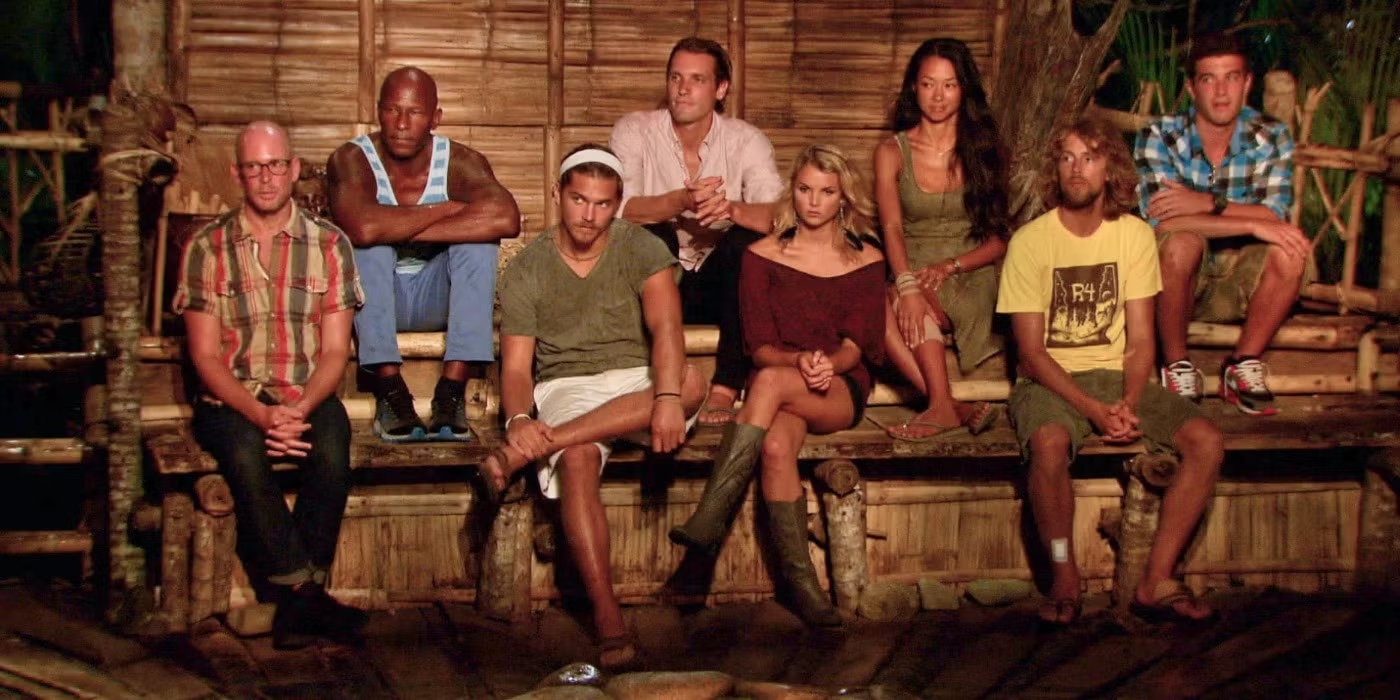
Every season would be unique and exciting, and viewers would not feel “gamed” by production, since they will see Jeff rolling the die in front of the contestants each week, allowing us to see the joy on players’ faces looking to get out of the bottom of a tribe, or terror as players lose allies that they were hoping to stick with for a long time.
The blank sides of the die could even list a bonus surprise that changes by season. Maybe a roll lands on “letters from home”, or an “idol” roll triggers a new idol being hidden at each camp, or the winning tribe of the reward challenge gets some kind of secret advantage. Possibilities are endless for spicing up the die.
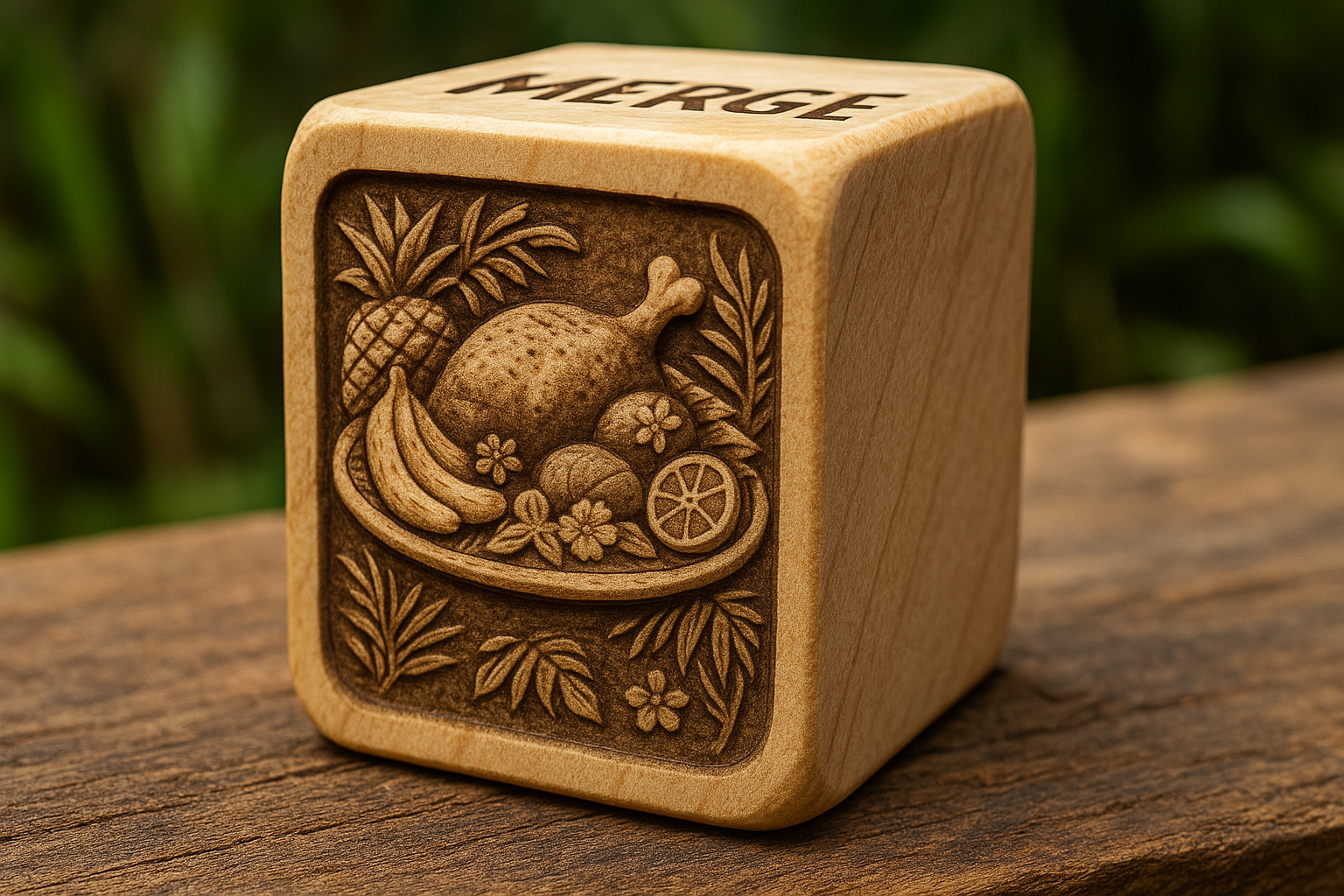
And because Survivor is at its best when it hands players tools for chaos, there could even be a new type of advantage in the game: “Re-Roll.” Imagine the die lands on “MERGE,” but you have the Re-Roll advantage. You cash it in, Jeff is forced to roll again, and maybe you buy yourself another few days with your original tribe.
The merge die adds tension and season variability (which is greatly needed, here in the middle of season “41, 42, 43, 44, 45…” all essentially in the exact same format) while at the same time providing a new type of structure since the rules of merging from 3 to 2 to 1 tribe would be spelled out with the merge die.
It’s a simple twist. Just one little die…with the fate of the entire game in its hands.
Jeff, if you’re reading this, call me (or cast me, your pick).